

### Blog Post:
Aging in place bathroom remodel projects can help you live at home longer, but the real challenge is knowing where your budget counts most. Safety is non-negotiable, yet the way you remodel – what you choose, where you prioritize, and how you keep costs in check – makes a major difference for quality of life and the value of your home.
Key Takeaways
- Walk-in showers, grab bars, and slip-resistant flooring have the highest safety impact per dollar spent in most regions.
- Professional installation costs for aging in place bathroom remodels vary widely by region and can range from $12,000 to $30,000+ for full-scale jobs.
- Always get at least three detailed bids, ask about waterproofing and safety details, and watch out for unusually low offers that cut corners.
- Why prioritize an aging in place bathroom remodel now?
- Step-by-Step Guide: Choosing and Prioritizing Accessible Features
- Advanced Analysis & Common Pitfalls
- Conclusion: Take Action to Age in Place Safely
- FAQs About Aging in Place Bathroom Remodels
Why prioritize an aging in place bathroom remodel now?
If you want to reduce fall risk and increase independence, there’s no better time to invest in an aging in place bathroom remodel. Bathrooms cause over 230,000 nonfatal injuries in older adults each year, and slips in the tub or shower are the top reason.[7] Even more, accessible remodeling brings crucial financial benefits: it’s a clear cost saver versus assisted living, lets you retain home equity, and new adaptations can actually boost property value. According to Zonda’s 2024 Cost vs. Value Report, a full universal-design remodel can cost up to $40,750 and still returns 49% at resale.[1] Prioritizing safety-focused features means you make the most of every dollar while reducing stress – both now and as needs change.
Step-by-Step Guide: Choosing and Prioritizing Accessible Features
Here’s how to confidently plan for a safer bathroom with real cost data, realistic sequencing, and the right questions for contractors. Don’t get distracted by design flourishes – focus on these actionable steps to maximize mobility, independence, and rapid value.
1. Understand Your Core Non-Negotiables
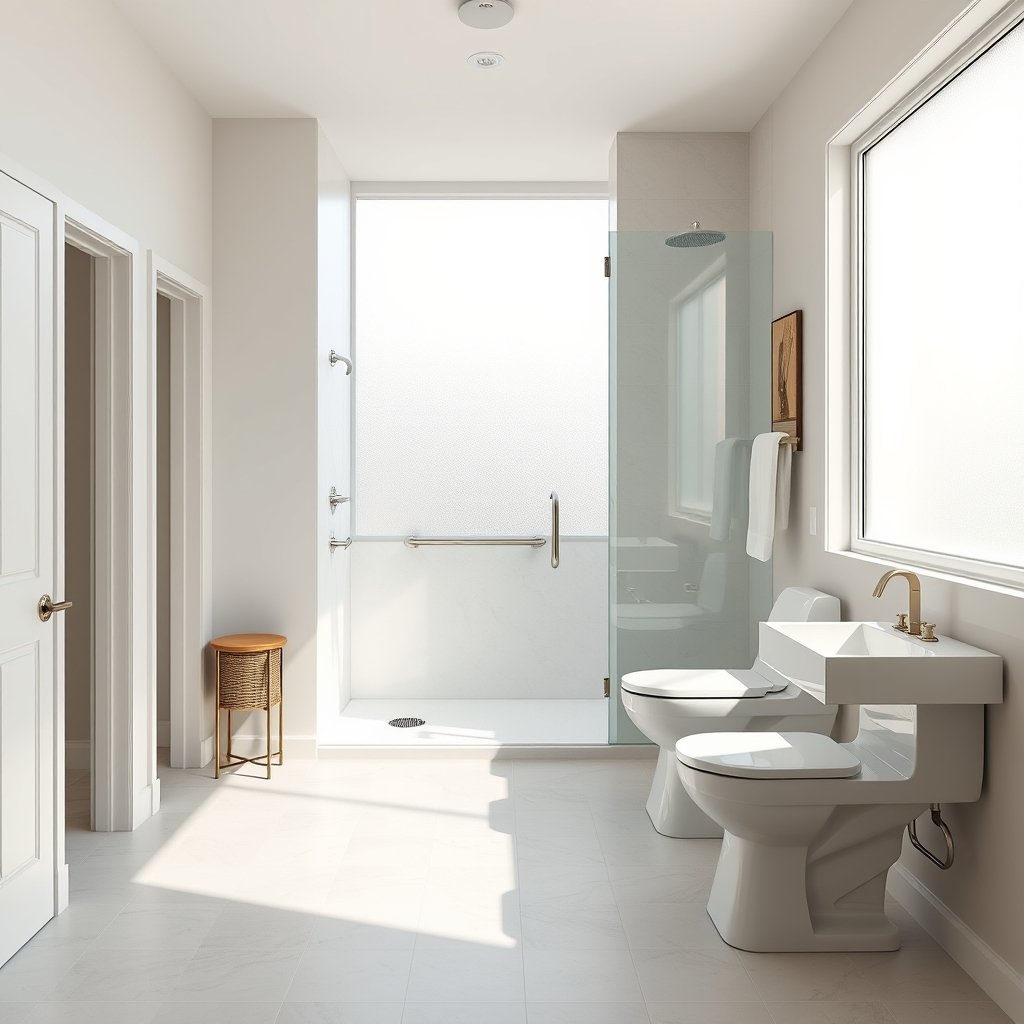
- Walk-in shower for seniors: Choose between prefab kits (low-threshold) and fully custom curbless models. A basic prefab starts at $4,000 (Midwest) and full custom runs $15,000–$18,000+ in metro Northeast or West Coast.[9]
- Anti-scald thermostatic valves ($80–$300): Prevent hot water burns.
- Non-slip tile or modular flooring: $6–$15 per square foot; $4,500–$11,000 for standard 10×10 bathrooms.
- Comfort height toilet ($300–$1,200): Reduces transfer risk.
- Lever-handle faucets ($150–$350): Easier for those with grip issues.
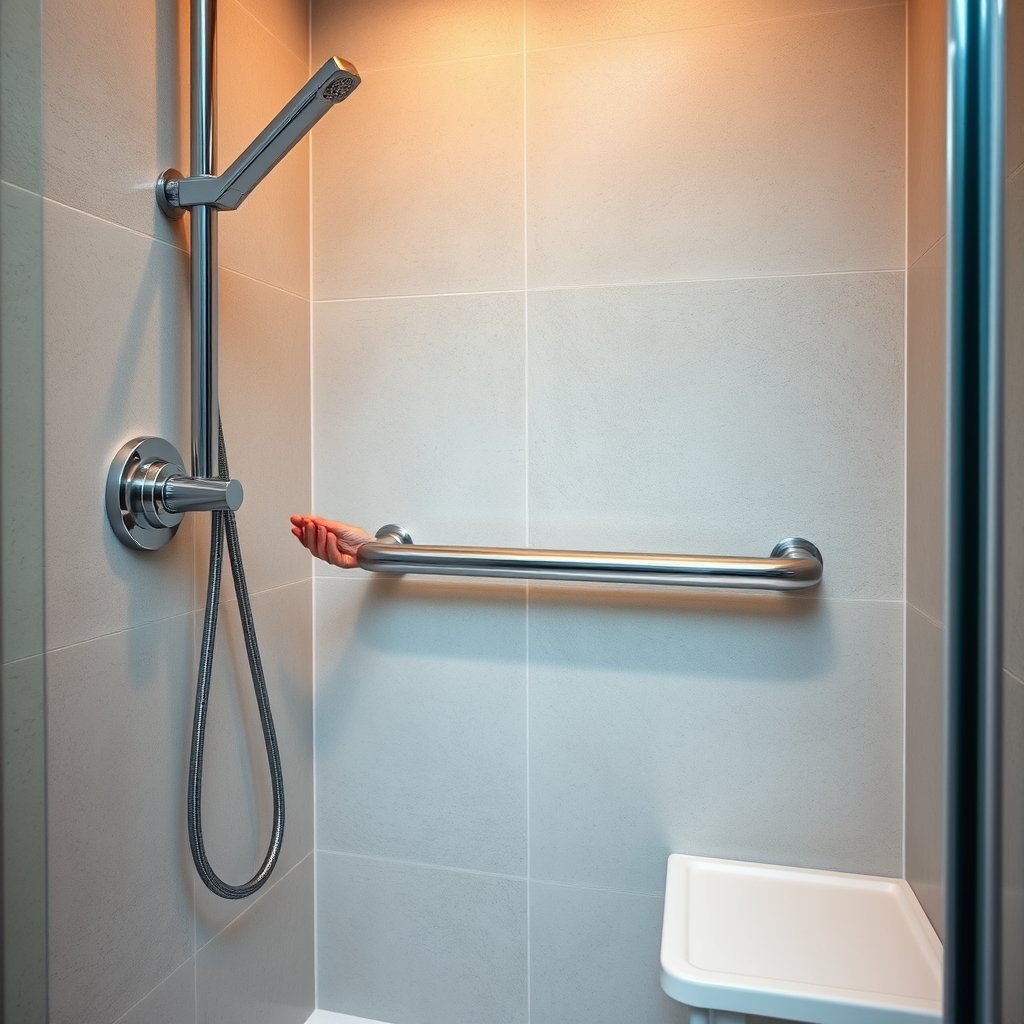
- Grab bars ($100–$200 per bar, plan for three to four bars near the shower, toilet, and entry).
2. Sequence by Budget Tier & Urgency
Improvements under $5,000:
- Install grab bars (3–4 for $300–$800).
- Add an anti-scald valve ($80–$300).
- Non-slip mats or partial floor patches in highest risk areas ($100–$400).
- Replace faucet handles with levers ($150–$350).
$5,000–$15,000 range:
- Prefab walk-in shower for seniors ($4,000–$8,500 depending on region).
- Comfort height toilet installation.
- Non-slip full flooring if possible.
$15,000+ full remodel:
- Custom curbless shower/bench (tile, niche shelves, wheelchair access, $15,000–$18,000+ in high-cost markets).
- Widen doorway ($300–$2,500).
- All lighting/electric relocated for visibility and reach.
- Vanity upgrades, seamless transitions, and storage reconfiguration.
3. Get a Detailed Regional Bid Comparison
- South: Midrange walk-in shower $6,000–$8,000; full remodels average $12,000–$20,000.
- Midwest: Basic walk-in around $4,000; similar full remodel costs as the South.
- Northeast: Walk-in shower $9,000–$13,000; full aging in place bathroom remodel $18,000–$30,000.[8]
- West: Walk-in install $7,500–$13,000, remodel $15,000–$25,000.[5]
Always ask local contractors for a full line-item estimate, then reference local averages for your region to validate the bid.
Immediate Low-Cost Wins
- Install 3–4 stainless grab bars (view full cost breakdown)
- Replace shower head with hand-held model and anti-scald valve
- Add bright LED motion lighting and toilet night light
- Test non-slip mats in the shower and next to the toilet
Advanced Analysis & Common Pitfalls
Even with a careful plan, homeowners often face surprises during an aging in place bathroom remodel. Here’s where projects go wrong, and how to ensure your safety and investment are protected.
Most Common Pitfalls
| Pitfall | How to Avoid |
|---|---|
| Lowball bids and hidden fees | Get at least three line-item bids. Compare to local regional averages (e.g., $7,500–$9,500 for a nationwide walk-in shower install). |
| Missing critical safety features (grab bars, anti-scald valve) | Insist on listing all accessibility details in the contract and verifying after installation. |
| Poor layout or limited space for wheelchairs/walkers | Ask your contractor about minimum clear floor space and bench placement. Consider future mobility needs, not just present ones. |
| Improper curbless shower execution (water leaks, tripping hazard) | Require written specs for slope, waterproofing, and threshold details, especially for tub-to-shower conversions ($2,500–$15,000 depending on design features). |
| Electrical or lighting not relocated for visibility | Add extra lighting and ensure switches are accessible from a seated or standing position. |
Contractor Selection Checklist and Red Flags
- Ask to see licenses, insurance, and references from at least two recent similar jobs.
- Require a line-item estimate, listing waterproofing, threshold (curb/curbless) construction, all safety features, and finish specs.
- Confirm they are familiar with ADA/universal design and local accessibility code.
- Don’t accept “package price” if bid is well below regional norms (e.g., $7,500–$9,500 for a midrange walk-in), as shortcuts are likely.
- Insist on permits and a warranty for work and materials.
See more on bad contractor bids and what to watch for in our dedicated guide.
What Most Pros Miss (Yet Are Low Cost to Add)
- Thermostatic anti-scald valve (often ignored, just $80–$300 installed)
- True slip-resistant (DCOF-rated) tile or flooring
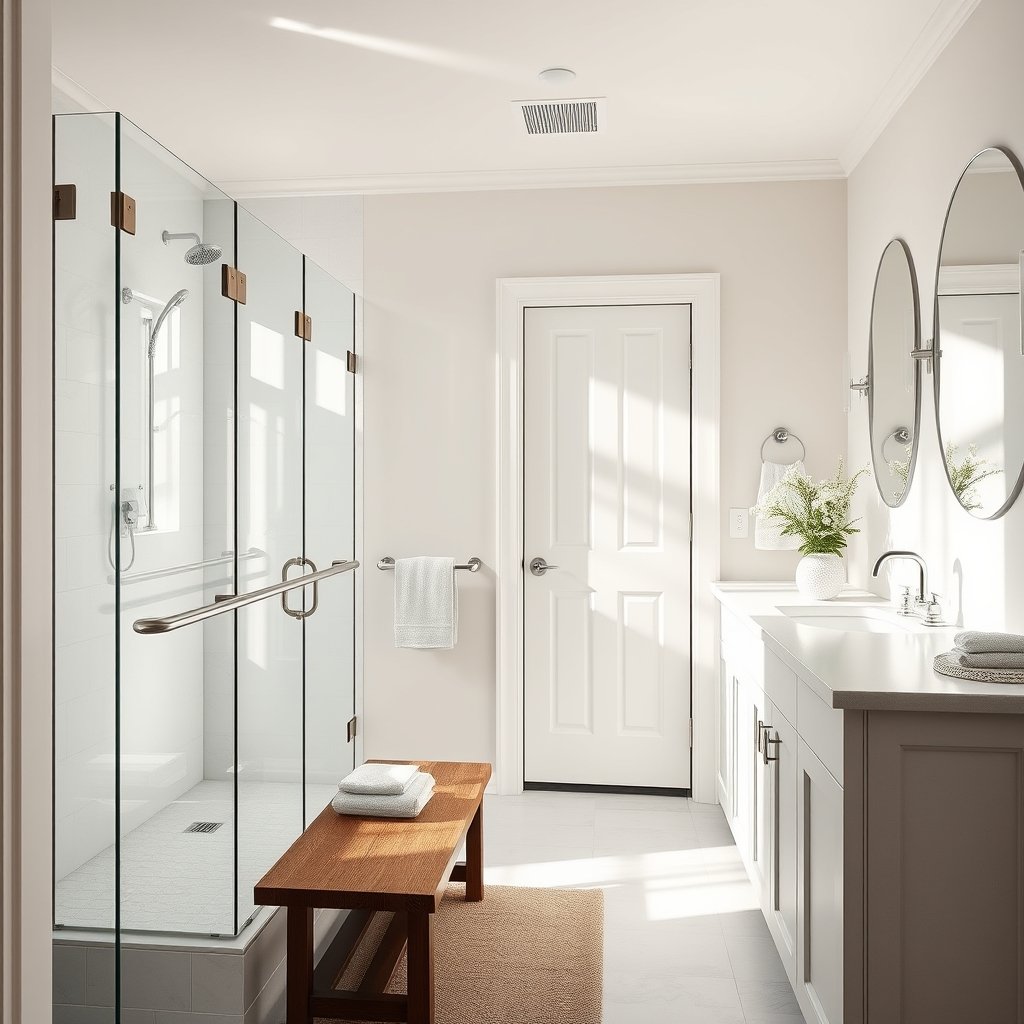
- Properly sized clear floor area (36–42 inches wide!) for future wheelchair/walker turns
- Bench or fold-down seat, placed within comfortable reach of controls and grab bars
Read our bathroom safety accessories list for more overlooked upgrades.
Conclusion: Take Action to Age in Place Safely
Making the right aging in place bathroom remodel choices is about prioritizing safety, value, and future flexibility. By focusing your spending on core features like walk-in showers, anti-scald protection, and non-slip surfaces, you dramatically lower fall risk and increase ease of use—no matter your region or budget. Choosing the right contractor and phasing your project lets you stay in control and avoid costly missteps.
Review your needs, gather three detailed bids, compare line-item costs to your regional ranges, and act now to secure both safety and independence. For next steps, see our regional budget templates and checklist to guide your remodel toward the features that really matter. Start planning your aging in place bathroom remodel today, and give yourself peace of mind for years ahead.
FAQs About Aging in Place Bathroom Remodels
How much does an aging in place bathroom remodel cost in 2024?
Costs vary by region and scope, but for a full remodel with a walk-in shower, grab bars, non-slip flooring, and upgrades, expect $12,000–$20,000 in the South or Midwest, $15,000–$25,000 in the West, and $18,000–$30,000 in the Northeast.
What is the difference between a prefab walk-in shower and a custom curbless shower?
Prefab walk-in showers are modular kits with low thresholds, costing $4,000–$8,500 installed. Custom curbless showers are fully tiled, have zero thresholds, tailored benches, and better wheelchair access; installs run $15,000–$18,000 or more in higher cost areas.
Which bathroom safety upgrades should I prioritize on a tight budget?
First, install grab bars near the shower and toilet ($300–$800 for three to four bars), an anti-scald valve ($80–$300), slip-resistant mats or select flooring patches, and lever-handle faucets for easier operation.
How do I make sure my contractor is qualified for aging in place bathrooms?
Ask for licensing, insurance, local references, and proof of recent similar installations. Insist on line-item bids describing waterproofing, threshold details, and which safety features are included. Avoid bids that are abnormally low compared to your regional averages.
Can I add accessible features in stages or must I do a full remodel?
You can absolutely phase your upgrade. Start with immediate safety items, then plan for larger upgrades like a walk-in shower or full new flooring. This approach helps spread costs while building toward your ideal space.